Computer Vision Basics
A vision model reads the redraw against its reference and scores gesture, construction, proportion, and anatomy separately.

04Drawing ScopeNextGen AI Studio 2026
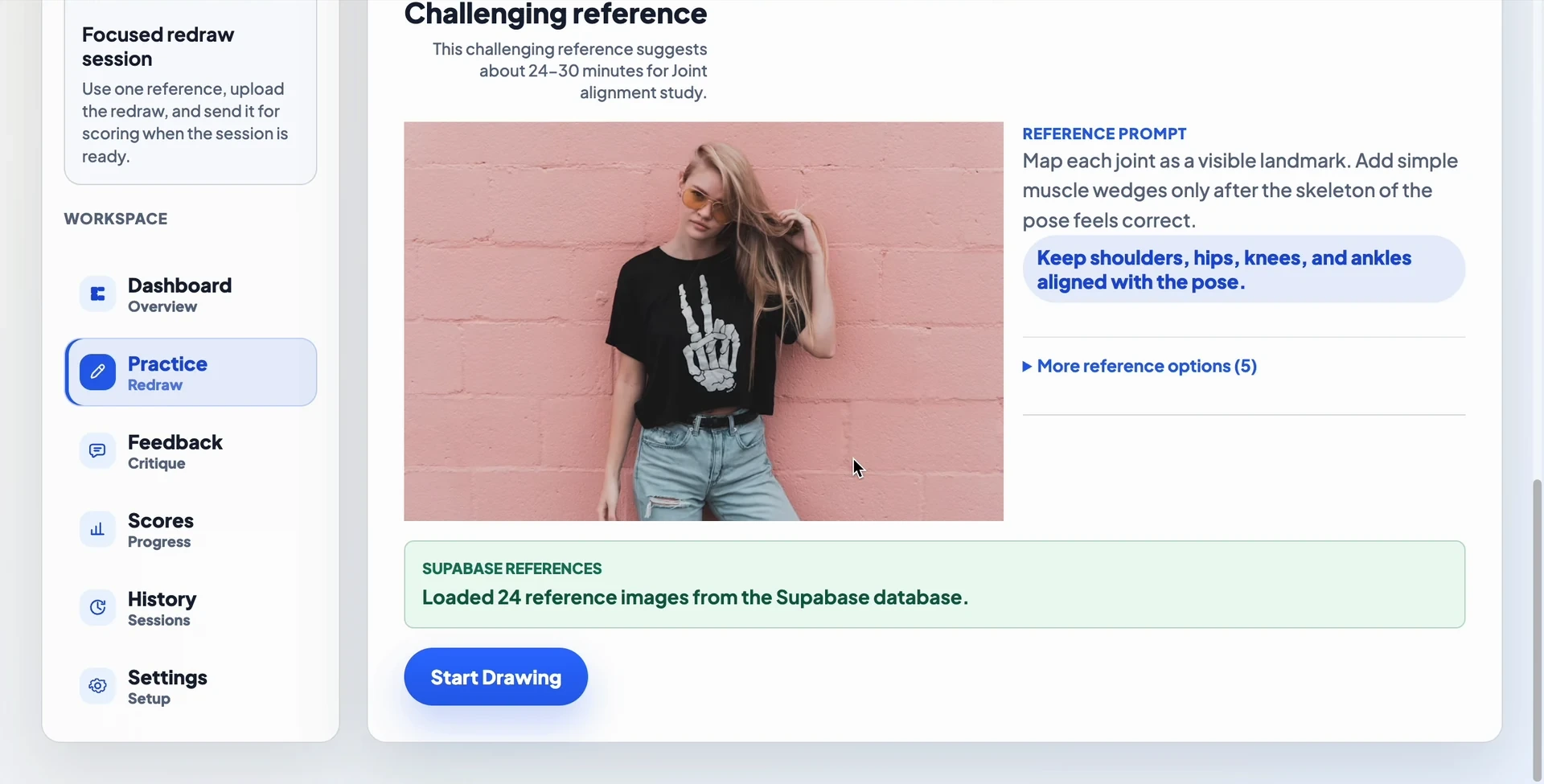
A plan-draw-review practice loop with AI-guided critique for figure drawing.
Earmias built Drawing Scope with Nathan — a patient art tutor for people teaching themselves to draw the human figure. Anyone who has tried to learn drawing alone knows how rare honest, specific feedback is, and closing that gap for beginners is a generous thing to spend a summer building.
Drawing Scope
Nathan YehEarmias Biazen
Learning to draw the figure alone is mostly guesswork. A tutorial shows you a finished result; it cannot tell you that the shoulders sit too high or that the pose carries no weight. The specific, unflattering feedback that actually moves a beginner forward is the one thing the internet will not hand you for free — and Nathan knew exactly what was missing, because he was the beginner asking for it.
Drawing Scope closes that loop: a reference to work from, a canvas to draw on, and a critique that scores gesture, construction, proportion, and anatomy separately — one strength and one fix, every time.
“As a beginner artist myself, I often see lacking opportunities to improve online. How do I improve my structure? How can I improve the way I invoke the gesture in my drawings?”
A vision model reads the redraw against its reference and scores gesture, construction, proportion, and anatomy separately.
A 70-line critique prompt that has to return a score out of 100 per skill, plus one strength and one thing to fix.
The redraw surface is the browser's own Canvas API, with practice history kept in local storage.
Also in the buildPer-skill critique scoring · Plan–draw–review practice loop · Bundled 16-photo reference library
The description of Earmias Biazen above was written by studio staff rather than by the student. Students can request a change at [email protected].